Drawing My Heart
An art-making practice for listening to the heart
Many of us spend our lives listening primarily to the thinking mind. We analyze, solve problems, make plans, and try to understand ourselves through thoughts. But there are other ways of knowing.
Across cultures and throughout history, the heart has been understood as a center of wisdom, feeling, love, grief, courage, and truth. Whether we think of the heart physically, symbolically, spiritually, or emotionally, many of us have experienced moments when we "knew" something in our hearts long before we could explain it with words.
Art can offer a bridge to this deeper knowing.
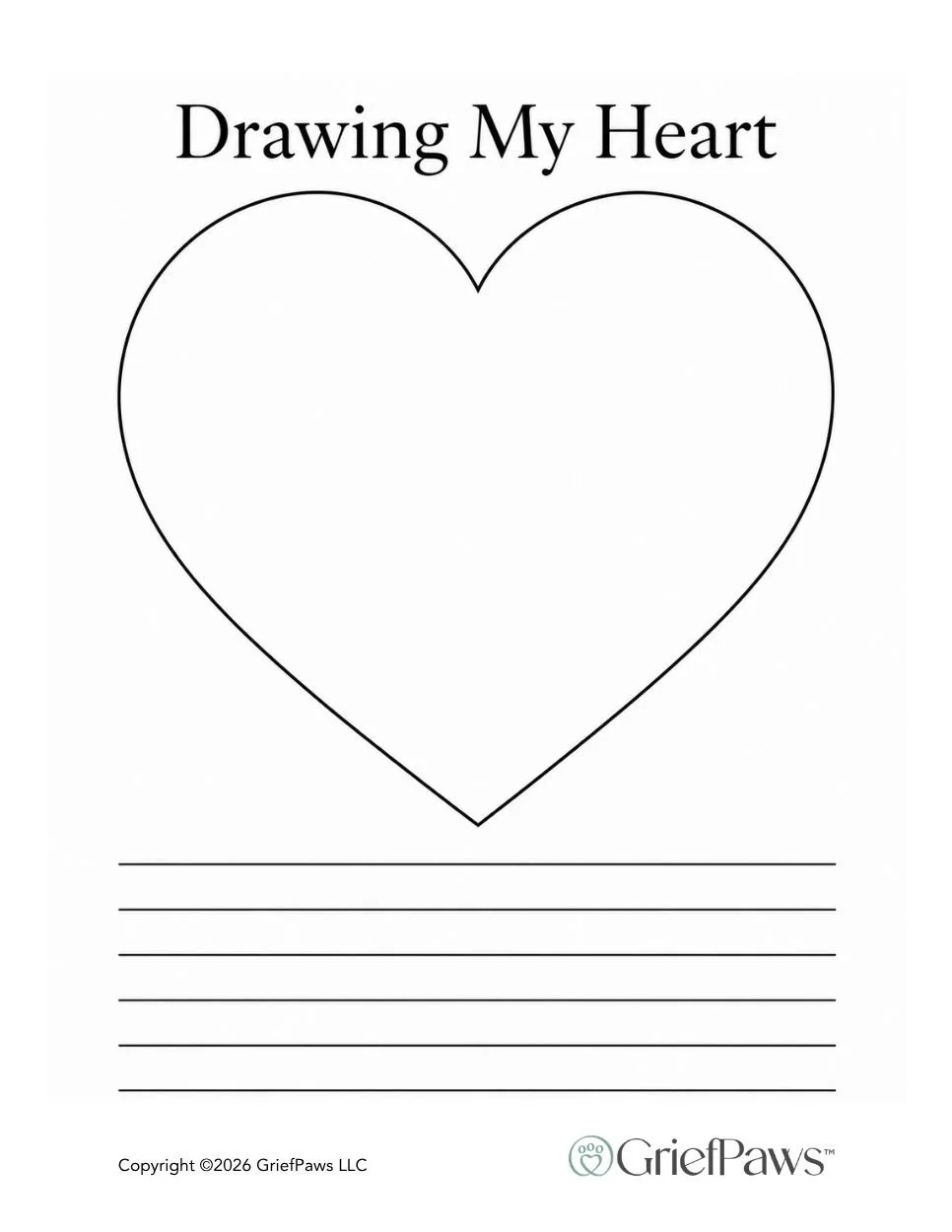
This simple exercise invites you to spend time in relationship with your heart. You may experience your heart as the physical organ that has sustained your life from your very first breath, as a center of feeling and emotion, as a source of wisdom, or all of these at once. Rather than asking your mind to explain, justify, or analyze, this practice creates space for your heart to express itself through images, colors, symbols, and shapes. If you like, use our worksheet you can download here.
Before you begin, find a comfortable position and allow yourself a few moments of stillness. Feel your feet on the floor. Notice your breath. Bring your attention to your heart space.
Then simply ask:
What would you like to show or tell me?
As you sit with this question, bring your sensory awareness to your heart and notice what is there.
Can you feel your heart beating?
What is the "weather" like in there?
Are there sensory words that describe what you notice—heavy, flowing, light, dark, trembling, broken?
Are there feeling words—sad, angry, lonely, confused, hopeful, peaceful?
Do you notice colors? What do they convey?
Is there a pattern? A landscape? A texture? A word, phrase, or song?
Whatever is there, allow it all the room it needs to be exactly as it is.
Use the heart outline to draw what you find. There is no right or wrong way to do this. The goal is not to create a beautiful drawing. The goal is simply to listen.
When you are finished, spend a few moments looking at what emerged.
The lines below the heart are there for you to journal or describe something about what your heart shared with you.
Sometimes the heart speaks softly. Sometimes it speaks in symbols. Sometimes it says things we have known all along but have not been ready to hear.
The more times you do this, the better, you could print out several copies and make this a practice. You could do it every day for a week or more.
The invitation is simply to listen, feel, draw.